know your pola


zip polaroid land camera - polaroid 636 - polaroid one 600
here’s the thing. on three consecutive visits to an undistinguished recycling shop nearby, i bump into a polaroid camera. finding them so effortlessly on my path makes my head turn twice, any polaroid fanatic will figure. every single time i pick one up, not knowing why, or even what to do with it. i am aware of polaroid fever, and have certainly missed round 1 to that, but that’s as far as my enthusiasm reaches.
so i have to call upon the service of those of you who are in the knowing, to simply state whether i’ve bought something worth its while (see specifications underneath picture), or should i just go ahead and do away with them? [sophie has more vintage].

the horse's hoof


in dendermonde (belgium) there lives a horse called bayard, that leaves its stable once every ten years (!). sunday, may 30th 2010, the horse will greet the city and its spectators, carrying four real life, real time blood brothers on its monumental back. it will fight its way out, like the legend tells it to. this papier mache~textile drapery brothers-and-sons-of-aymon-tradition dates back to the 12th century, like good traditions do.
running up to that glorious day, the horse rehearses outside the stables and even on la grande place. today yours truly polished up on horse’s talk and sniffed around its pawing hoofs. that’s about all i got to do, because mr. bayard stayed inside. tonight no show, no picture. that's all, folk(s).

i deffo need...

... a little bit of this

corner view ≈ end of my street

an end is a beginning, it matters where you stand. the task delivers, i stand in unexpected spots in order to get my fill of the street end, and its beginning. welcome

i bend down

i look up

i read the message

i drown in colour

a band is playing

the wall is sometimes the end

mysterious mister gustave


foto of the baobab
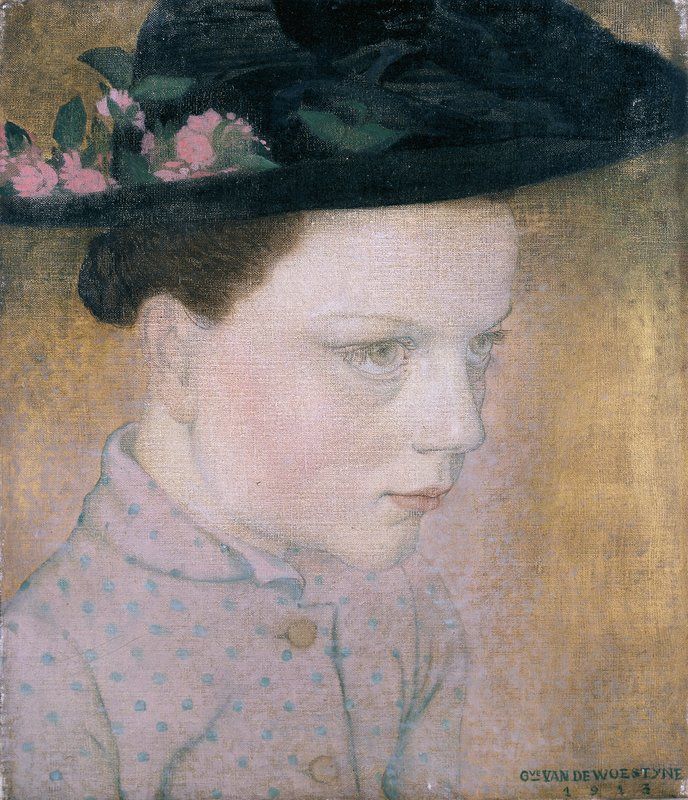
something i haven’t heard in any art comments, is how gustave van de woestyne (belgium, 1881-1947) often painted trees in corners, in backgrounds and even in the front of his landscapes. moreover, the type of tree he paints is reminiscent of the african andansonia (common name baobab – aka as monkey bread tree – besides in africa also found in australia). san legend has it that god, in a wrathful moment, threw the tree down to earth, in an upside down mode, the tree roots pointing towards heaven.

spring, 1910
since gustave van de woestyne was a deep religious man, is it possible that he knew about this legend? in a funny kind of way, was van de woestyne adding an ironic tinge to everyday life, society and religion in his symbolic pictures? it is true that i walked through a pleasing retrospective exhibition (until june 26th in ghent), past symbolic, expressionist paintings, vastly smiling, and shedding a few prizing tears. walk with me.

farmers' wife, 1913

[artist's] children at the dinner table, 1919

gaston and his sister, 1923

the art group ‘first group of latem’, gustave van de woestyne third from the left, his brother karel van de woestijne (writer) second from the right (ca.1902 in sint-martens-latem, banks of the lys, ghent)